Showing posts with label TRANSMITTED. Show all posts

Thursday, 12 January 2012

IPHREHAB: SEXUALLY TRANSMITTED INFECTION IN MEN

IPHREHAB


Why Syndromic Management has specific relevance to RTIs/STIs?
  • STI clients hesitant to approach doctors
  • Often choose far-off doctors
  • Do not prefer to revisit
  • First visit may be the last chance
  • If opportunity missed the first time- is like pushing client towards HIV
  • Dealing with 1 STI case is an opportunity to treat at least 1 more case
  • IT IS PUBLIC HEALTH PROBLEM, not about one individual
RTI / STI Syndromes in Men
ä(Sexually transmitted infections , 
Reproductive tract infections )
ä

Symptoms
Syndrome
RTIs/STIs


Urethral Discharge
Urethral/Vaginal discharge syndrome
Gonorrhoea, chlamydia, trcichomonas, 
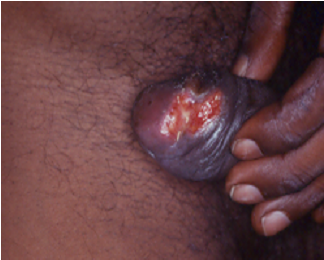
Genital ulcers
Genital ulcer syndrom,
Chancroid, syphilis, genital herpes
Inguinal bubos
Inguinal bubo syndrome
Lymphogranuloma venerium, Chancroid
Scrotal swelling
Painful Scrotal Swelling
Gonorrhoea, chlamydia
Genital skin conditions
Genital warts, molluscum contagiosum, pediculosis pubis, scabies
Male Syndromes 


Genital Ulcer

Genital Ulcer


Scrotal Swelling

Inguinal Bubo


IPHREHAB : Sexually Transmitted Diseases

IPHREHAB


Sexually Transmitted Diseases

  • Venereal Diseases
  • Sexually transmitted diseases
  • Sexually transmitted infections
  • Reproductive tract infections
Approaches to RTI/STI Case Management
  • Traditional clinical approach
  • Laboratory assisted approach
  • Syndromic approach

Traditional clinical approach
Laboratory-assisted approach
Syndromic approach
Interviews patient for symptoms
Picks the relevant flowchart
Does a clinical examination
Does a clinical examination for finding signs
Uses flowcharts as tools
Uses clinical experience to identify symptoms and signs of a specific STI
Collects samples for testing/ refers to laboratory for tests
Syndrome identification
 
Treats for the specific STI
Treats for STIs identified by the results of the laboratory tests
Treats patients for the most common organisms responsible for that syndrome (usually 2-3 STIs)
Educates patients for compliance and prevention, promotes condoms and emphasizes the importance of partner management